
Bharadwaj said it has not rained in Delhi in the last 3-4 days, yet still the water level in Yamuna reached 208.66 metres.

The bounteous monsoon this year has already dumped 1159.4 mm of rainfall in Delhi till Thursday afternoon, the highest since 1964 and the third-highest ever, according to the IMD data

The civic body's horticulture department fears some of the uprooted trees might be among those tagged as 'heritage trees' by the NDMC, but the team is yet to compile a damage report and ascertain the facts.

According to the India Meteorological Department (IMD), the Ayanagar weather station recorded 99.2 mm rainfall, the maximum in the city, during the 24-hour period ending at 8.30 am on Thursday.

Heavy rains brought the city to a virtual standstill on Friday as waterlogged roads and streets slowed down traffic, causing inconvenience to hundreds of commuters.

Farmer leader Abhimanyu Kohar, who is a member of Sankyukt Kisan Morcha, said on Sunday that farmers have waterproof tents but they cannot protect them from biting cold and waterlogging.

Moderate to heavy rains lashed several parts of Delhi on Wednesday throwing the morning traffic out of gear.
Officials have confirmed that water has been released from the Hathnikund Barrage in Haryana, contributing to the rise in river water levels.
Delhi recorded over 40 mm of rains in the first few hours of the monsoon, bringing the mercury down and providing relief to people reeling under heat. No major traffic snarl or waterlogging was reported from the city, as there was no heavy rain in the morning hours though the sky was cloudy and it was drizzling.

People were seen wading through knee-deep water in several areas. Commuters, too, had a hard time as vehicular traffic crawled on the roads clogged with long tailbacks.
Heavy showers lashed New Delhi breaking a seven-decade record for highest rainfall in a single day in February and triggering massive traffic jams due to waterlogging across the city on Tuesday.

The weatherman has predicted rainfall throughout the day with the mercury settling at 19C.
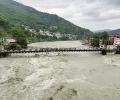
Incessant rains unleashed more death and destruction on Monday in parts of north India, with 37 people killed in landslides and other rain-related incidents in the last two days even as the Army and NDRF teams stepped in to intensify the relief and rescue operations.
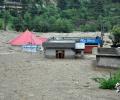
As the weather improved in parts of north India, which was pummelled by heavy rains for days, authorities on Wednesday worked on a war footing to rescue stranded tourists, restore vehicular traffic on arterial roads and prevent floodwaters from entering new areas.
Vehicular movement in some parts of New Delhi was affected for the second day on Tuesday due to water-logging, a spill-over effect of last evening's heavy rains.

Deputy Chief Minister Manish Sisodia and Environment Minister Gopal Rai visited the Eidgah in Mustafabad and interacted with locals besides taking stock of facilities being provided by the government at relief camps.

Bhuyan Sarma filed the suit at the court of civil judge No 1 of Kamrup metropolitan district on Tuesday and it is likely to come up for hearing on Wednesday, her counsel Padmadhar Nayak said.

East and northeast India recorded 29 per cent rain deficit -- 141.5 mm against the normal of 199.9 mm -- from March 1 to May 3.
Heavy rains lashed the capital again on Friday, leading to waterlogging in several parts of the city and throwing traffic out of gear besides leaving people stranded on the roads during the morning rush hours.

The protesting farmers, mainly from Punjab, Haryana and western Uttar Pradesh, have been at the border points of the national capital for almost 40 days now, braving the bone-chilling cold weather in the region.
It also rained heavily in other parts of North India.
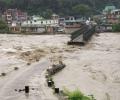
All educational institutions in Shimla and Kullu districts will remain closed on Monday as heavy to extremely heavy rains continue to lash the state, district officials said.

'Mumbai's corroding infrastructure, Delhi's pollution, Bangalore's rain water drainage, Kolkata's electricity -- these are all real and serious life threatening situations.'

Every week, we bring you fascinating videos, chosen by you, through your likes.

The strong words came after the ASG said that the MCDs and the other agencies need to work together in an integrated and synergetic manner to handle the problem.

The rain ebbed in some places in north India and pelted down in others on Tuesday, with at least seven more people dead and hundreds stranded as raging waters gushed through villages, towns and fields -- from the desert state of Rajasthan to the hills of Himachal Pradesh.

The Southwest Monsoon usually covers the entire country on July 8. The earlier normal date for the monsoon to cover the entire country was July 15.

If only you had thought ahead, you would have stocked snacks and biscuits, bread and cake, and vegetables suited for Amma or pondatti to make your favourite bajji and pakoda, observes N Sathiya Moorthy.
Two persons were killed on Tuesday in North India due to heavy rains, which also disrupted normal life at many places in the region.

The farmers have said the weather will not dampen their spirit and they will continue the protest till their demands are met.

The rainfall in July was minus seven per cent which comes to around 93 per cent of the Long Period Average, IMD Director General Mrutyunjay Mohapatra said.

Climate change has hampered the ability of the forecasting agencies to accurately predict severe events and weather bureaus across the world are focusing on augmenting the observational network density and the weather prediction modelling to improve predictability, India Meteorological Department (IMD) Director General Mrutyunjay Mohapatra has said.

Tomar discussed with Singh 'all possible options' to find a 'middle path' to resolve the crisis, sources added. Singh, who served as agriculture minister in the erstwhile Atal Bihari Vajpayee cabinet, has emerged as a key troubleshooter and is working mostly behind the scenes on this issue.

Way before the rains arrived at Talwandi Sabo Power plant in Punjab, the one check the coal ministry was carrying out was the availability of coal stock with the generator. Talwandi Sabo Power Limited (TSPL), the 1,980-Mw thermal power plant of Sterlite Energy, part of the Vedanta Group, which supplies about 15 per cent of Punjab's power, is one of the most difficult locations to manage coal supplies. It is nearly 1,700 km from the mines of Mahanadi Coalfields in Odisha, the longest coal route in India and possibly the trickiest as it cuts through the traffic heavy rail lines between Delhi and eastern India.

Incessant showers caused landslides and floods in various parts of the country leaving at least 17 people dead on Wednesday while thousands more were forced to move to safety as rivers swelled and water reservoirs filled up fast.

The frequency of very heavy downpours seems to have increased.

Flash floods triggered by torrential rain have killed at least 22 people in India and forced more than 1,70,000 from their homes.

Here's a recap of the events from the past 48 hours.
Five persons were killed in rain-related incidents in Jammu on Saturday as the monsoon continued to hold sway in many parts of the country's northern plains with torrential showers triggering landslides and flooding.

Very light rains and thundershowers occurred at isolated places in Uttar Pradesh though, and a fresh warning of heavy showers was issued in Himachal Pradesh as the India Meteorological Department (IMD) said heavy to very heavy rainfall is likely in several parts of the country, including the northern region, over the next six-seven days.
